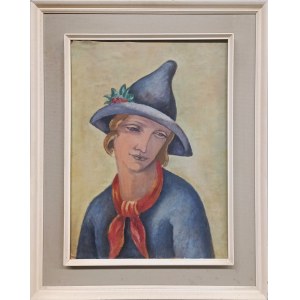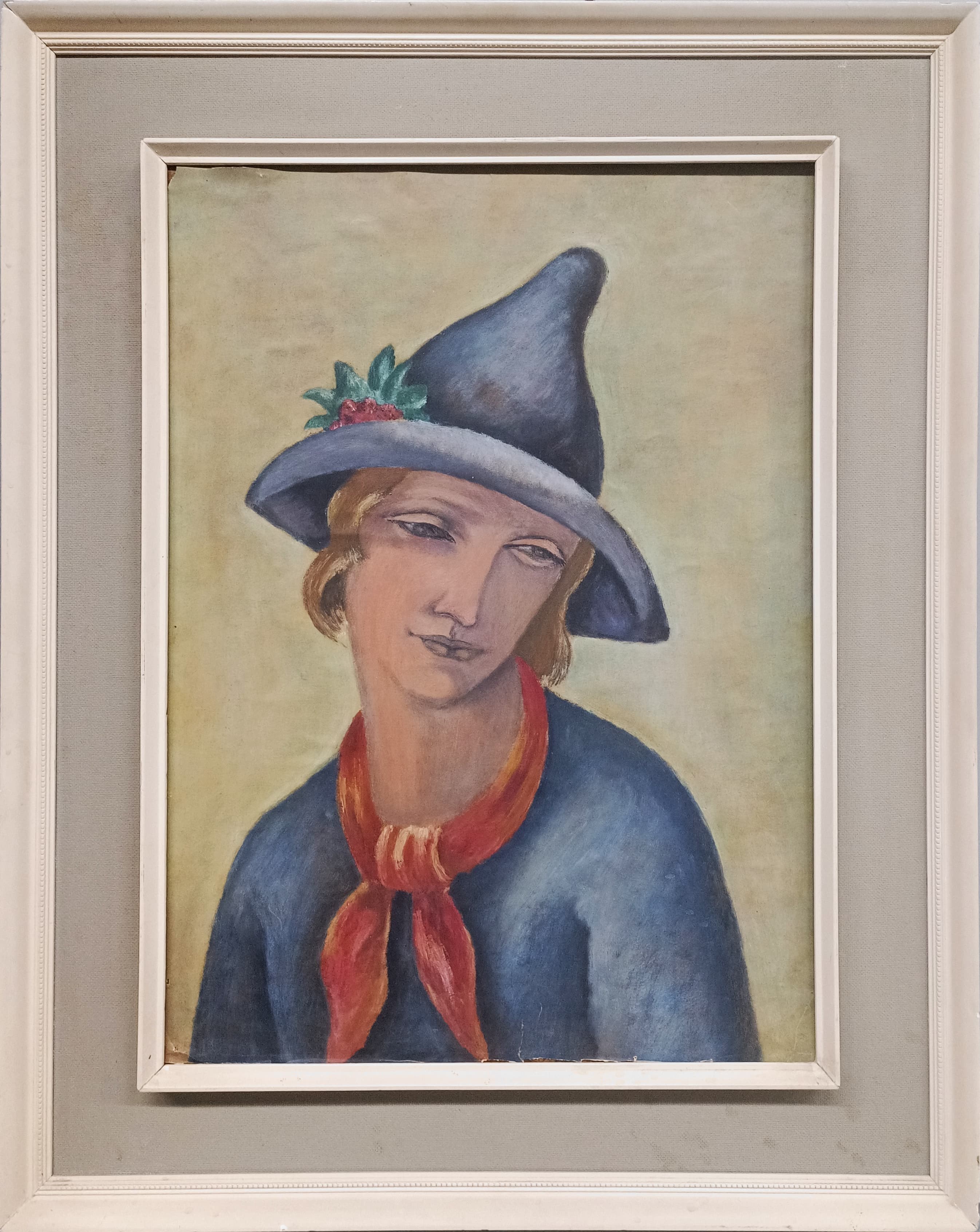
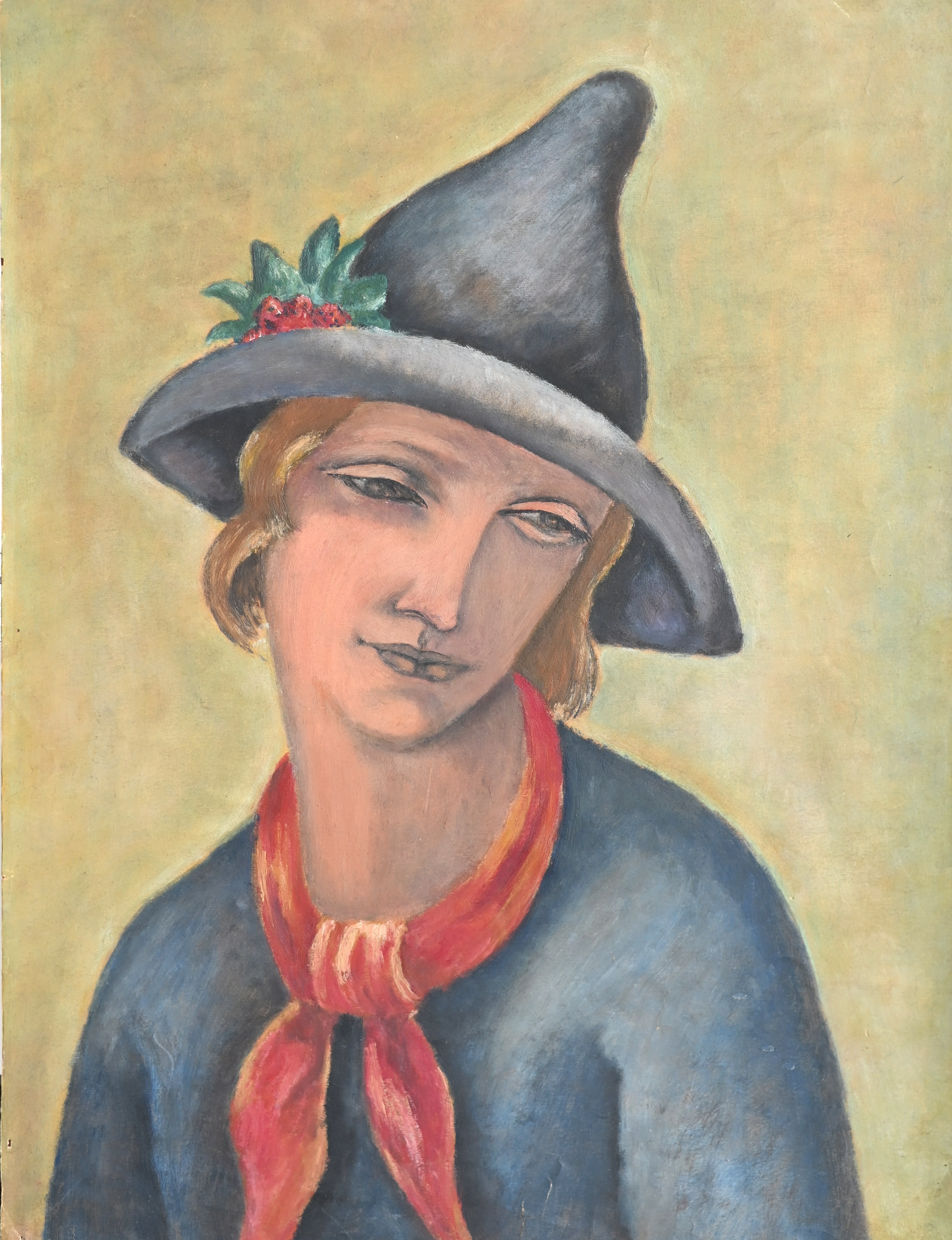
Eugeniusz Zak (1884–1926), Head of a Woman, ca. 1925
Oil on paper mounted on plywood, 74 x 59 cm (frame) / 54.4 x 39.2 cm (inside the mat).
The paper is slightly peeling in places / damaged at the edges.
From the collection of Lucie and Clément Pech*.
*
Eugeniusz Zak, Head of a Woman (study), 1924
Oil on paper mounted on plywood, 55 x 40 cm
Clément Pech, born June 28, 1882, was a French military officer and businessman. In 1902, he began his military career and served until 1928. From 1918 to 1923, he was stationed in Częstochowa as part of an agreement between the newly formed Polish government and its French counterpart. Under the terms of this agreement, French officers assisted in establishing Polish military structures, in exchange for which they received promotions. Clément Pech, then a lieutenant, was stationed in Częstochowa. He even received the Cross of Valor from the Polish government (a photograph of the ID card authorizing him to wear the decoration is included in the documentation accompanying the painting). In Częstochowa, he met Łucja (who later, in France, went by the Frenchified version of her name, “Lucie”) Henig, who came from a well-to-do Jewish family. The couple married, and in 1923, Lucie and Clément moved to France and settled in Saint-Mandé, a wealthy town near Paris.
Once in France, Lucie and Clément befriended many artists. Clément was an artist himself and frequently exhibited his works at the Paris Salons. Lucie, for her part, was not only highly artistically sensitive, but her knowledge of Polish, Russian, Ukrainian, and even Lithuanian was also a tremendous asset. Thanks to this, she easily established contacts with many artists from the École de Paris who hailed from Eastern Europe and often spoke French only poorly. Lucie helped them, among other things, with administrative matters, translated documents and correspondence, and did small favors for them. According to the account of Frédéric Pech (Lucie and Clément’s grandson), his father André (the couple’s son) often recalled that his mother was a regular at Montparnasse, especially at the famous restaurant Le Dome, where the cream of the international artistic community active in Paris at the time would gather.
One of the artists who became part of Lucie’s circle of acquaintances and friends was Eugeniusz Zak (1). In the summer of 1924, Madame Pech, who was in Poland at the time, agreed to help the artist bring his nephew over for vacation and later drive him back to Poland so that he would be back in time for the school year (2). It was then, as a token of gratitude, that Zak gave her a study for a painting he was working on at the time.
The work has remained in the Pech family to this day: for many years, it hung in the study of André, the son of Lucie and Clément.
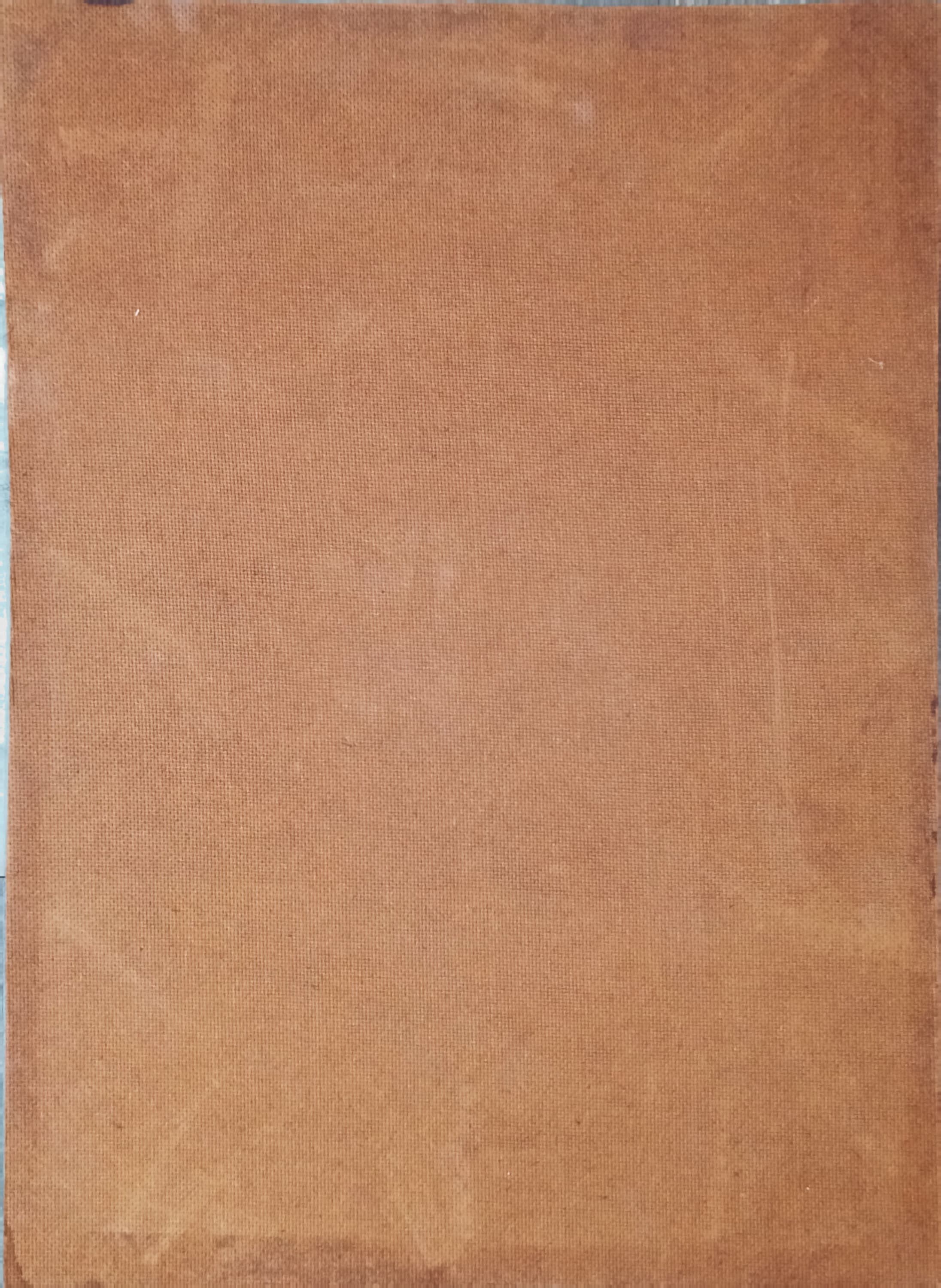
André Pech was an engineer who worked for many years at Clarel, using fiberboard as insulation in prototype public lighting projects. According to the recollections of André’s son, Frédéric, “around 1960–61, my father decided to frame the painting, so he glued that oil-on-paper work onto a fiberboard panel that had been specially cut to size at the factory. He built the frame himself. I was a “teenage DIY enthusiast” at the time, and I remember holding down the clamping box (made of wood) while my father cut the molding with a hand saw. (…) Later, he had the frame painted at the factory, placed the artwork inside it, and to finish the framing, he used “Clarel self-adhesive paper,” which is still visible on the back of the work today. Since then, I have always seen that oil painting on paper, framed and hanging on the wall of his room, above his bed” (3).
After his death in 1962, the work was inherited by his son Frédéric, the grandson of Lucie and Clément. After the painting was transferred to the Roi Doré Gallery and subsequently to ArtKrak Auction House, the frame was removed (to verify the exact dimensions and condition of the work, as well as for aesthetic reasons).
The woman’s head depicts a portrait of an anonymous woman, shown in half-profile (while the visible part of her torso appears to be positioned almost en face, her head is tilted in a gesture characteristic of Zak’s figures). The final version of the work—an oil on canvas measuring 45 x 37.5 cm—is housed at the National Museum in Wrocław. The two works are framed slightly differently: in the painting on canvas, the figure is positioned more centrally, cropped at the bottom (part of the scarf around the woman’s neck is hidden), and the tip of her hat is close to the upper edge of the canvas. The painting is also signed. The study in question, on the other hand, is an oil on paper in which the figure is shifted slightly to the left, the scarf around her neck is almost entirely visible, and the space between the hat and the top edge of the painting is slightly larger. The figure herself is rendered with slightly more definition; however, the greater space around her compensates for this impression, making the composition feel light and “airy” nonetheless—an effect further enhanced by the presence of numerous gently curved lines. Ultimately, however, the study is very close to the final version—since it is an oil painting of dimensions similar to those of the canvas painting, it can undoubtedly be considered the final stage of preparation for the creation of the final version, directly preceding it. This is all the more evident because the painting is of excellent quality; Zak does not employ here the additional simplifications or schematic treatment of the subject sometimes characteristic of preparatory works. The only differences—aside from the minor compositional changes mentioned above—are the absence of a signature and a slightly less subtle use of color in the preparatory work. In the final version, the figure is somewhat “more delicate,” rendered with greater finesse. Zak also uses slightly more contrasting colors, achieving—especially in the case of the scarf around the woman’s neck—a chiaroscuro effect reminiscent of the play of light, for example, on silk.
Thus, this study is an interesting work both from a historical perspective—it comes from the fascinating, well-documented “ ” collection and fits into the history of Zak himself, as well as his relationship with the intriguing, though nearly unknown, figure of Lucie Pech—and from an artistic one. This is, in fact, a study for one of Zak’s most characteristic paintings from the 1920s, a period when the artist created works often dominated by slightly elongated figures, frozen in distinctive, theatrical poses, frequently wearing peculiar headdresses. The simplified, somewhat geometric forms suggest the influence of Cézanne, while the slightly melancholic character brings to mind the works of Puvis de Chavannes. At the same time, regardless of the assimilated influences—whether more or less evident—Zak developed his own, highly distinctive style, full of lyricism and a touch of nostalgic poetry. The Woman’s Head is thus a work typical of the final years of Zak’s life, and as such, an object of immense historical, artistic, and collectible value.
(1) In his case, the language barrier was not an issue, as Zak spoke French fluently. Nevertheless, they moved in the same social circles, and both were eager to maintain contact with their home country. Moreover, Zak’s wife, Jadwiga Kohn, came from Częstochowa, Lucie’s hometown, which must have brought the two couples even closer together. It is even possible that the Zaks and the Pechs met while still in Poland. Although no concrete evidence currently allows us to specify exactly when and under what circumstances the meeting took place—whether still in Poland or already in France —nevertheless, after the outbreak of World War I, Zak and his wife left France and settled in Częstochowa, where they remained until around 1921. At exactly the same time, Clément Pech was in Częstochowa, and it was then that he met Łucja. It is therefore quite possible that Zak, who had very close ties to France, established contact with a French officer—one who was particularly interested in art—and with his fiancée, and later wife, especially since they all moved in similar social circles.
(2) The story is passed down in the Pech family through oral tradition, but the family archives also contain documents confirming the artist’s close relationship with Lucie, in particular a note addressed to “Dear Ms. Łucja,” dated May 29, 1924, in which Zak asks his friend… to bring his nephew for a vacation.